What happens in a Functional Behaviour Assessment?
A plain-English guide for families to the Functional Behaviour Assessment (FBA): who does it, what it involves and how it shapes a behaviour support plan.
Oct 12, 2026
Positive Behaviour Support Practice (BSP)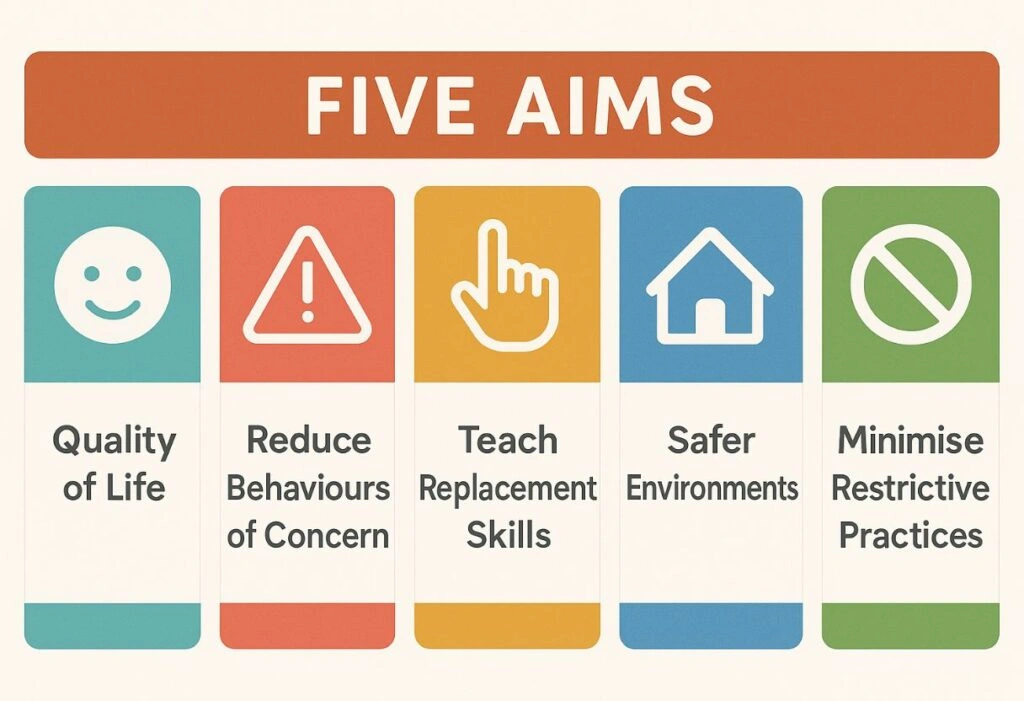
If your family member has behaviour support in their NDIS plan, you will probably hear the term Functional Behaviour Assessment, or FBA, early on. It can sound clinical, and families often wonder whether their loved one is about to be tested or judged.
They are not. An FBA is a way of working out why a behaviour is happening, so that the support built around the person fits them.
What an FBA is
The NDIS rules describe a functional behaviour assessment as the process of understanding the function, or purpose, behind a person's behaviour. In practice, that means looking closely at what tends to happen before a behaviour, what happens afterwards, and what the person may be gaining, avoiding or trying to communicate.
Behaviour that worries the people around someone is rarely random. It may be the most reliable way a person has found to say "I'm in pain", "this is too loud", "I don't understand" or "I need a break". The assessment is how we find that out.
An FBA is one part of a wider behaviour support assessment. The NDIS Quality and Safeguards Commission expects practitioners to look at the whole person, including health, communication, relationships, daily routines and surroundings, and not only the behaviour itself.
Who carries it out
Under the NDIS, only an NDIS behaviour support practitioner can carry out a behaviour support assessment, including an FBA. A practitioner is someone the NDIS Commission has considered suitable for this work, and they must be engaged by a provider registered for specialist behaviour support.
Families, carers and support workers are not expected to do the assessment. They are, however, an important source of information, and the Commission's guidance says they should play a part in gathering it.
What usually happens
Every assessment is shaped around the person, but most include the following.
Consent and a first conversation. The practitioner explains what the assessment involves and asks for informed consent from the person, or their guardian, before collecting any personal information.
Meeting the person. The practitioner spends time with the person, in person or by telehealth, and uses communication aids or supported decision-making tools where these help the person take part.
Talking with people who know them well. With permission, this can include family, carers, support workers, teachers and other professionals.
Reading what already exists. Earlier behaviour support assessments, allied health reports and medical reports are reviewed so the person does not have to start again from the beginning.
Observing and recording data. The practitioner observes the person in the places that matter, such as home, school, a day program or work. Families and staff may be asked to fill in simple recording charts.
Describing the behaviour clearly. The behaviour is described in terms anyone could recognise, including how often it happens, how long it lasts and how intense it is, along with what seems to set it off and what follows it.
Putting it together. The practitioner brings the information into a shared explanation of why the behaviour happens. Practitioners call this a formulation.
How long it takes
There is no fixed number of sessions, because it depends on the person and on how many settings need to be understood.
The FBA feeds into the comprehensive Behaviour Support Plan. Where a plan includes a regulated restrictive practice, the NDIS rules require the comprehensive plan to be developed within six months of the provider being engaged. The NDIS Commission expects providers to use the same timeframe as a guide for other plans.
The person is not left without support in the meantime. The Commission expects an interim plan to be in place to manage risk while the assessment is under way.
How families can help
You know your family member better than any professional will. A few things make a real difference:
Jot down what was happening just before and just after a behaviour, even in a few words.
Share any reports you already have from therapists, doctors or school.
Tell the practitioner what a good day looks like, and what the person enjoys and is good at.
Mention changes in health, sleep, medication, routine or living arrangements.
Say so if something in the process doesn't feel right for your family or your culture.
What you receive at the end
The findings are used to build the comprehensive Behaviour Support Plan. A good plan focuses on the reasons for the behaviour. It sets out changes to the environment, new skills for the person to learn and clear guidance for the people supporting them.
An assessment is also not a one-off. The Commission's guidance says it should be revisited at least every 12 months, or sooner if the person's circumstances change.
Talk to us
Dawnability provides Functional Behaviour Assessments and Behaviour Support Plans from our Wiley Park practice, for children, young people and adults across Canterbury-Bankstown and South-West Sydney. Our behaviour support practitioners work within a psychologist-led team, and English and Arabic-speaking staff are available.
If you would like to talk through whether behaviour support is right for your family, contact us through the enquiry form on our website.